
How to Run in the Summer Heat
by Chelsey Stone
Running in the summer heat doesn’t have to be miserable. These 5 expert-backed tips will keep you cool, hydrated, and safe while running in hot weather.
By Chelsey Stone
You know it, I know it: Running in the summer heat and humidity sucks.
You’ll want to keep running as you normally would on a lovely, crisp fall day. Don’t. You might think getting out the door earlier—before the sun even rises—will make the run bearable. It won’t.
Now that we’ve gotten that out of the way, let’s talk about how you can take care of yourself and maintain your running routine in the peak of summer—and enjoy Read & Run Chicago events.

Many popular places in Chicago to run have little shade—hydrate!
Hydrate Before, During, and After Your Run
Why hydration matters in hot weather
Hydration helps you sweat, which helps cool your body. “Hydration status is critical to the body’s process of temperature control. Body water loss through sweat is an important cooling mechanism in hot climates and in physical activity.” (Water, Hydration, and Health).
Pro tip: Start with cool fluids
If you want to stay cool while running, it’s even better if you consume cool fluids or some ice before your run. Turns out, if you drop your core body temperature before sweating kicks in, you allow your body temperature to change more gradually. (Does Cold Water or Ice Slurry Ingestion During Exercise Elicit a Net Body Cooling Effect in the Heat?)
Bring fluids on your run too. If your mind goes numb at recommendations like “consume 300–800ml per hour” just know that carrying fluids and sipping occasionally will help. On long runs, you can program your watch to beep every 2 miles as a reminder to drink—no thinking, or calculations, required.
Did you know? Since the guided runs at Read & Run Chicago events include stops at landmarks connected to the book inspiring the event, these are also ideal moments to take in fluids.
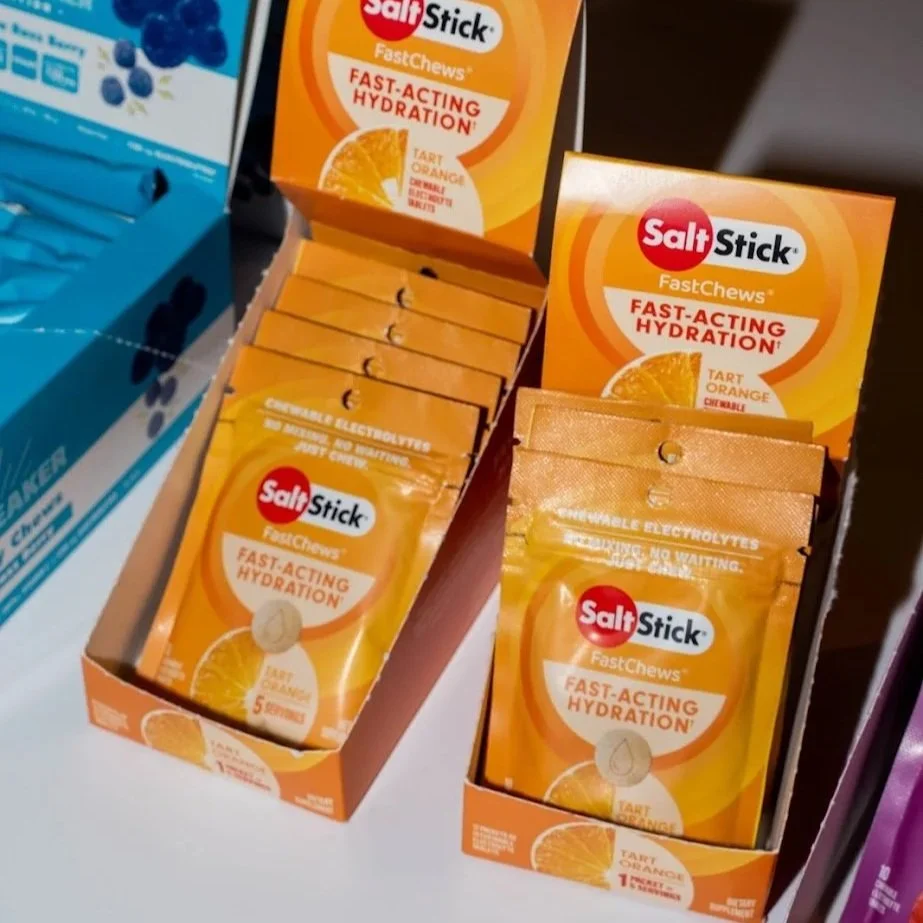
SaltStick at Read & Run Chicago shakeout run in October 2025. Photo Credit: Madeline Walczak.
Don’t Forget Electrolytes
Proper hydration in the summer for runners is crucial.
While sweat is mostly water, it also contains sodium and chloride (salt) and minerals such as magnesium and potassium. (Sweat) Electrolytes like these lost in sweat are crucial to fluid balance, nerve and muscle function, and more. (Electrolytes)
If you’re already in the midst of a hot, sweaty, humid workout and therefore running low on electrolytes, drinking water alone can actually dilute the remaining electrolytes in your blood. This can lead to muscle cramps and other issues that can ruin a run. (Overhydration: How Much Water Is Too Much?)
So, be sure to include electrolytes in your hydration game plan. I recommend SaltStick’s FastChews, a quick, efficient way to get some electrolytes. The sodium in FastChews is absorbed within the first 45 seconds of chewing. Sports drinks and electrolyte powders, which must be absorbed through the gut rather than the mouth, require at least 20 minutes. (New Study Shows How SaltStick FastChews Can Work in Minutes) When you’re experiencing cramps or other issues from electrolyte loss, relief in 45 seconds is a game changer.
[Related: Guide to Chicago’s Running Community]
Wear Smart, Breathable Running Gear
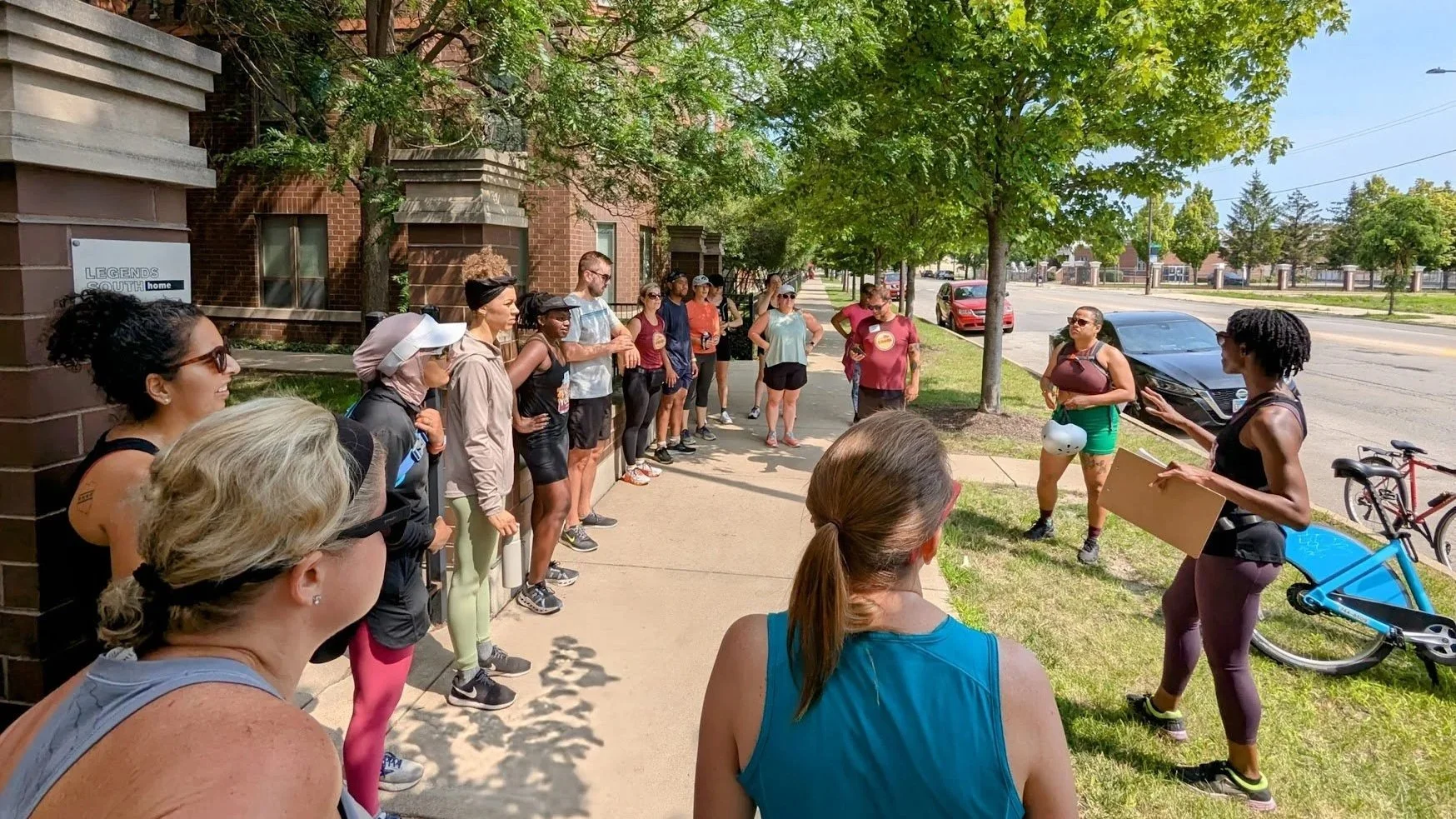
Guide Cynthia Okechukwu at a stop along her route inspired by Toya Wolfe’s Last Summer on State Street on a hot July day.
Sunglasses and hats for sun protection
A hat and sunglasses protect you from harmful UV rays and sunburn, keep sweat out of your eyes, and reduce squinting from the glare of the sun. These things tell your brain the environment is less intensely hot and sunny and therefore cooler. Wearing sunglasses can “alter subjective perceptions of exercise-induced feeling states and perceived exertion.” (The effect of wearing sunglasses on performance, exercise-induced feeling states, and perceived exertion in runners) And hats protect your scalp from radiant heat, although you’ll want to wear a mesh hat that allows sweat to evaporate and heat to dissipate. (Will A Hat Or Visor Keep You Cooler On The Run?)
What to wear in hot weather
Clothing “presents a unique opportunity to aid thermoregulation during exercise in the heat.” (The Role of Sports Clothing in Thermoregulation, Comfort, and Performance During Exercise in the Heat: A Narrative Review) In other words, what you wear can impact your body’s ability to regulate temperature.
Loose-fitting clothing increases air flow across the skin’s surface and “may improve the efficiency of heat dissipation during exercise.” (The Role of Sports Clothing)
Just keep in mind, if you’re prone to chafing, you actually want a snugger fit in those areas, like your inner thighs. So balance your wardrobe: consider wearing a loose-fitting shirt with form-fitting shorts.
[Related: Read Read & Run Tours’s Writers Who Run column]
Listen to Your Body and Slow Down
Runners can be stubborn. Come hellish temps or high humidity, we’re reluctant to let anything derail our training.
But the heat of summer can leave you feeling like you’re working twice as hard to go your regular pace. Listen to your body, ease back, and remember that moving your body should be a joy. Don’t resent the necessary slow down; embrace it, soak up the heat that overcomes the strategies above, and conjure it up in the middle of winter—when there’s a whole new set of challenges to overcome.
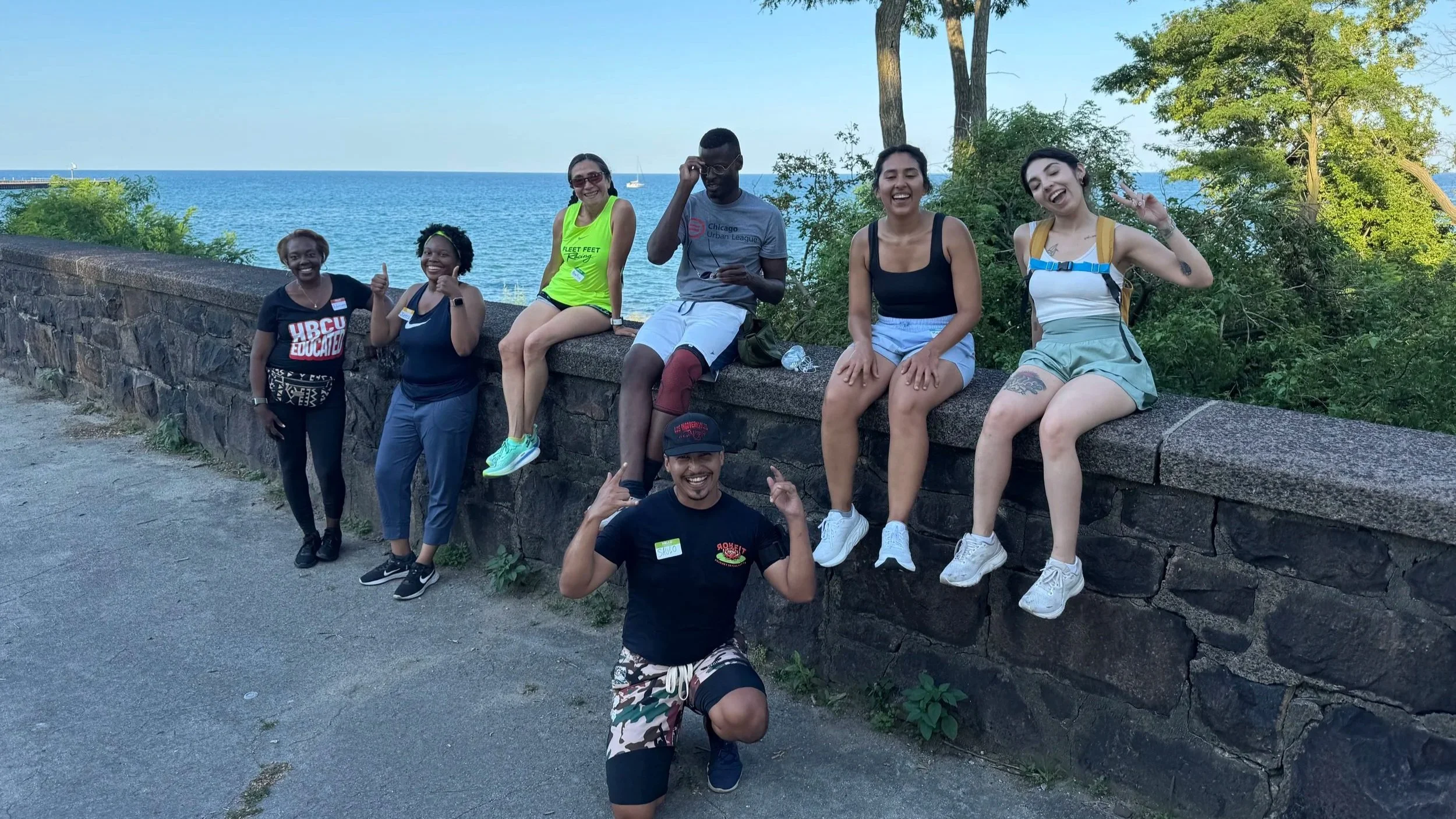
Readers & runners along the lakefront in South Shore during a Read & Run Chicago program at South Shore Library Branch in July 2025.
Summer Running Tips Recap
Drink cool fluids before your run
Carry water and sip throughout your workout
Include electrolytes to prevent cramps
Wear breathable, sun-protective clothing
Slow your pace and listen to your body
Want more running tips, book recommendations, and news about events?
About the writer: Chelsey Stone is a freelance editor and writer. She's worked on projects like Adam Nimoy's memoir and written for Runner's World, Bicycling, and National Geographic (about the Chicago River!). A former Chicagoan, she's now living in the Washington, DC area. She spends her free time visiting all the free museums she now has access to.